


No products in the basket.

From Leftovers to Life-Changing Compostable Plastics: A Greener Way to Package the Future
Posted onImagine a day when fruit peels, leftover vegetables, or a scoop of rice from last night’s dinner are no longer seen as waste, but instead transformed into “golden materials” for packaging. And when their job is done, they simply decompose — leaving no burden behind for the planet. What once sounded like science fiction is now becoming reality, thanks to scientists at Monash University in Australia.
By using naturally occurring bacteria such as Cupriavidus necator and Pseudomonas putida, researchers have been able to convert sugars from food waste into polyhydroxyalkanoates (PHAs) — a compostable bioplastic that can be molded into thin films, much like conventional plastics.
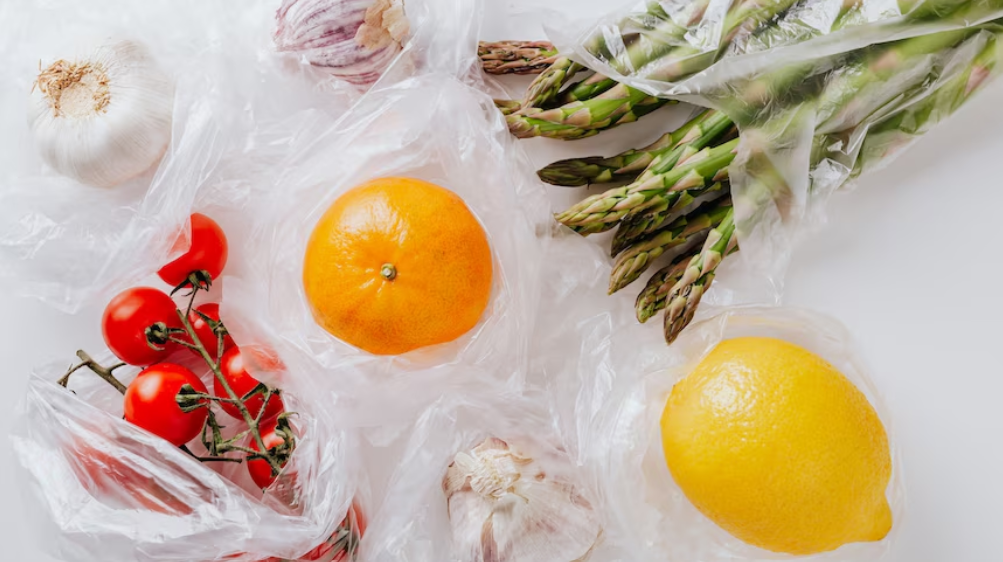
What makes this discovery even more exciting is its flexibility: by tweaking the bacterial process, scientists can tailor the properties of the material — making it soft, strong, or durable — depending on packaging needs. This means the new bioplastic is not only eco-friendly but also versatile enough to replace petroleum-based plastics in many applications.
The team has already partnered with industry players like Enzide and Great Wrap to test its potential in real life — from food packaging and agricultural films to medical materials. Because it is biodegradable, these products can be composted together with food or agricultural waste, helping to reduce the strain on municipal waste systems.
Why does this matter?
- Cutting down on plastic waste: Conventional plastics can linger for centuries, releasing harmful microplastics. PHAs, on the other hand, break down completely.
- Turning “waste” into value: Leftover food, once discarded, becomes a valuable resource.
- Circular economy in action: A closed-loop system where waste is continuously regenerated.
- Multiple uses: PHAs can be adapted for bags, wraps, or even medical coatings.

Picture this: you buy a loaf of bread, packaged in a PHA-based container. After finishing, you simply toss it into your compost bin, and it naturally breaks down without leaving a single trace of microplastics.
On a larger scale, food processors, markets, and farms could collect massive amounts of food waste and channel it into bioplastic production. Packaging companies, farmers, and cities would work together to build a closed-loop system — reducing landfill pressure and lowering greenhouse gas emissions.
This kind of innovation shows us that the path to a greener future doesn’t just depend on renewable energy or advanced technologies. It can also come from rethinking the everyday materials we use, and reimagining waste as a resource.
Step by step, we can build a new generation of packaging that no longer weighs on our planet, but instead becomes part of a sustainable cycle.
Because the future is not only about the energy we generate or the machines we build — it’s also about how we wrap the world: with care, with creativity, and with respect for nature.

 Tiếng Việt